Thousands of Local Families Are Struggling With Healthcare Costs. This Report Reveals Why.
A federal law drew a line through the U.S. Virgin Islands. On one side there is help. On the other side there is nothing to buy at any price. Most people on St. Croix were never told which side they were standing on.
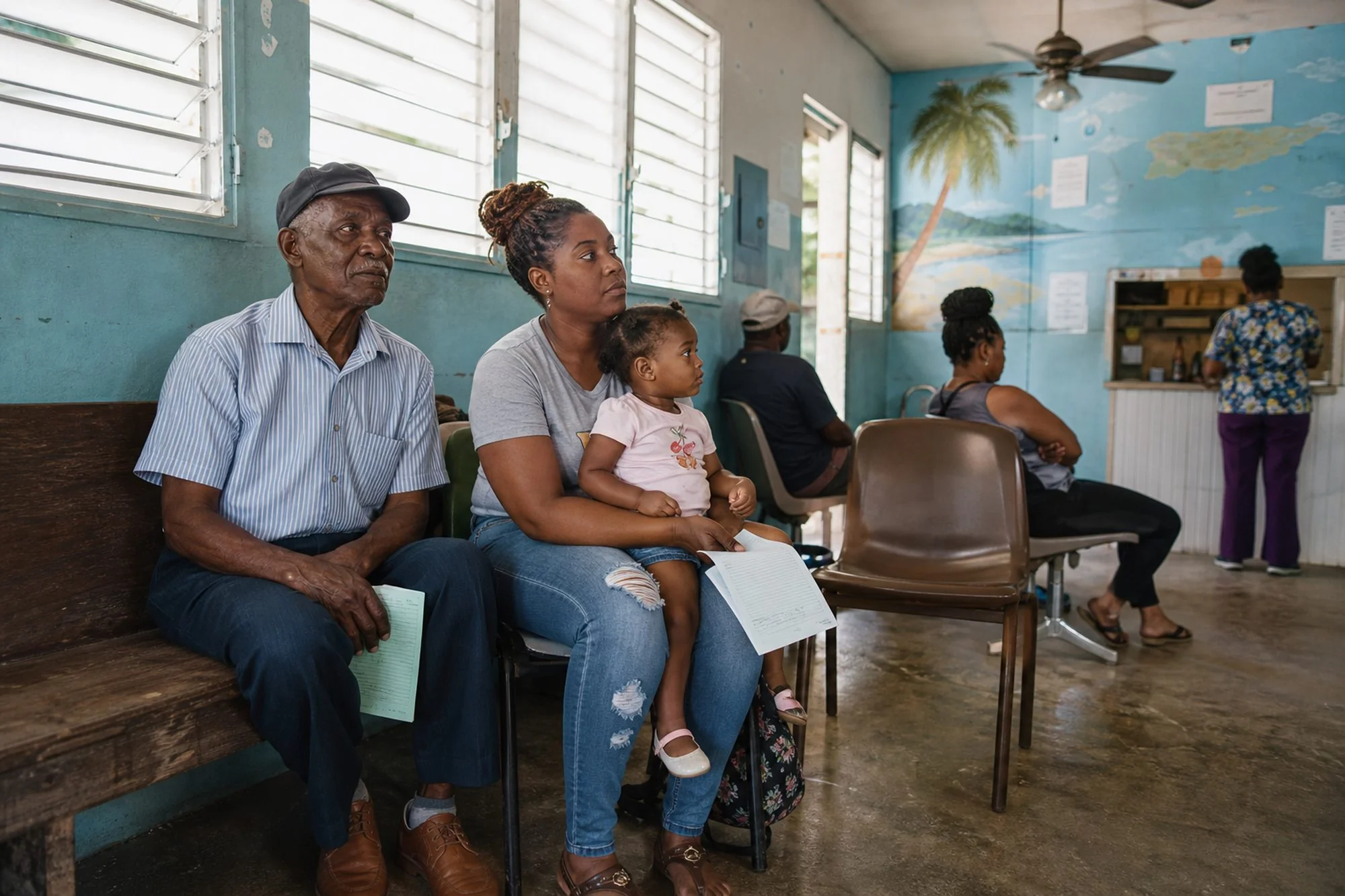
The Virgin Islands is facing not only a healthcare-access problem, but a household-budget crisis.
For many families, seeking care means accepting several costs at once: the appointment, time away from work and the possibility of tests, prescriptions or an emergency room bill. When those costs collide, even persistent pain may not be enough to make an appointment possible.
In 2023, about one in six Virgin Islands adults told federal surveyors they had needed to see a doctor during the previous twelve months but could not because of cost. More than one in five said they had no personal doctor.12
These statistics cannot be explained simply by individual choices. They reveal a widespread financial barrier, one shaped by the conditions under which local families work, pay bills and attempt to obtain medical care.
But for many, these sacrifices are still not enough.
Part OneNo More Individual Insurance
On December 31, 2025, the last company selling individual health insurance in the U.S. Virgin Islands closed its book of business here.
It had 43 active policies. It covered 63 people.1
Sixty-three. In a territory of about 87,000.11
The company had asked the local insurance regulator to approve a 7.5 percent rate increase. The regulator approved 4 percent, saying the company had not shown the loss figures to justify more. The company said 4 percent was not enough to keep the business alive. So it left.1
That was the entire individual health insurance market in the Virgin Islands. One company. Sixty-three people. Gone over three and a half percentage points.
If you live on St. Croix, do not get a plan through a job, and do not qualify for Medicaid, there is currently no health insurance policy you can buy.
Not a good one. Not a bad one. Not an expensive one. None. There is no healthcare.gov for the Virgin Islands, and as of this writing there is no private company selling to individuals here either.123
This is not new. It is just quiet.
Back in 2013, insurance regulators wrote it down in a national report. The language has not aged a day. The last insurer in the Virgin Islands individual market had stopped writing new policies. That left residents “unable to purchase individual health insurance for any price.”6
Thirteen years later, that sentence is true again.
Part TwoWhere Medicaid Coverage Ends
Every place in America draws a line. Below the line, Medicaid. Above the line, you are on your own.
Here is the difference. In the US, above the line is a lifeline for patients because there is a marketplace where the federal government helps pay for your premium. That line is a step, not a cliff.
In the Virgin Islands there is no step. There is only the cliff.
And the cliff sits low. The territory’s own Medicaid office lists the cutoff for a single person at about $15,654 a year.7 Work full time at $8 an hour and you clear roughly $16,640. So that’s it for you. You have no options left.
For scale, the federal poverty line for one person in 2025 was $15,650.9 So the cutoff here lands right about at the poverty line. On the US mainland, where Medicaid expanded, the same person keeps coverage up to roughly $21,600.9
Part of the reason is a rule almost nobody outside government has heard of. The Virgin Islands sets Medicaid eligibility against a local poverty level rather than the federal one.8 The number that decides your life is not the same number that decides it in Florida.
The same paycheck, two different locations
Drag the slider to a yearly income for a single adult. The panels show what that person can get where you live, and what the same person can get on the US mainland, where Medicaid expanded.
That is about $8.65 an hour at 40 hours a week.
Below about $21,600 a year, a single adult keeps Medicaid.
Over the Medicaid line, with no marketplace and no carrier selling to individuals.
In the summer of 2024, when the pandemic protections ended, 16,480 Virgin Islanders came off the Medicaid rolls in about a month. That is 19 percent of the population. Enrollment fell by 44 percent. The government had planned for around 9,000. The real number was nearly double.10
One senator said it out loud in the hearing room: “How can we let our own people go uninsured when they were insured before?”10
Nobody answered him.
Almost one in five people in the territory lost their health coverage in a single month. Most of them had nowhere to go next, because there was nothing to buy.
Based on V.I. Legislature testimony, July 202410Part ThreeHow We Got Left Behind
So why is there no marketplace here?
The answer is not a scandal. There is no villain in a back room. What happened is smaller and colder than that. It comes down to one word in a law.
When the Affordable Care Act passed in 2010, it included a short section about the territories.3 It gave each territory a choice. Build your own marketplace, or take money for Medicaid instead. Congress set aside $1 billion for all five territories. Puerto Rico got $925 million of it. The other four split the remaining $75 million.3
The Virgin Islands did the math. To run a real marketplace and help people pay their premiums the way a state does, the territory’s own task force calculated it would need about $251.5 million over six years.6
It was offered about $25 million.6
So the territory took the money as Medicaid dollars. Federal records show $24.9 million awarded to the Virgin Islands “in lieu of establishing a health marketplace.”4
That decision was made in a meeting room. Nobody on St. Croix voted on it.
Then came the second blow
On July 16, 2014, federal insurance officials sent a letter to the insurance commissioners of the territories.5
The letter explained that the big consumer protection rules in the health law use the law’s own definition of the word state. And under that definition, the territories do not count. So those rules, the letter concluded, “do not apply to the territories.”5
Here is what stopped applying:
- Guaranteed coverage. A company does not have to sell you a plan.
- Community rating. A company can charge you more because of your health history.
- A single risk pool. Healthy and sick people do not have to be priced together.
- Essential health benefits. A plan does not have to cover a standard set of care.
- Rate review and spending rules. Less oversight of what companies charge and keep.
Source: letter from the federal Center for Consumer Information and Insurance Oversight to territorial insurance commissioners, July 16, 2014.5
It is these series of unfortunate events that left a catastrophic gap in our healthcare system, leaving thousands of Virgin Islanders to fend for themselves.
Of course it collapsed. Nothing was holding it up.
Part FourWhat it is costing this island
A gap in a statute does not stay on paper. It shows up in the community.
Start with what the federal government has already put in writing about St. Croix. The whole island is designated a Medically Underserved Area and has been since 1995.13 It is also a federally designated shortage area for primary care, for dental care, and for mental health care. The mental health ratio on the books is roughly one provider for every 6,998 people.13
Now the hospital. Gov. Juan F. Luis Hospital carries the lowest possible overall rating from federal regulators, one star out of five.14 In December 2025, the hospital’s own medical staff formally notified federal officials about conditions inside. Their letter used four words that traveled across the island: “We are rationing care.”15
Nine years after the 2017 hurricanes, St. Croix still has no permanent hospital. Care runs through temporary modular buildings. The replacement is on a four to five year construction timeline that had not started as of late 2025.16 Do the math and the island does not get a permanent hospital until somewhere around 2030.
The damage did not stop when the wind did. Researchers surveying patients at a Virgin Islands health center found that nearly one third could not manage their long term conditions after the storms. The most common reasons were stress and simply not being able to get their medication.33
None of that is the fault of the nurses and doctors working inside it. Ask anybody who has been treated there and you will usually hear the same split: the building is failing, the people are trying.
Locally, chronic diseases are on the rise
In 1999 through 2001, federal surveyors found that about 7.6 percent of Virgin Islands adults had been diagnosed with diabetes.26
By 2023, using the same survey, it was 16.6 percent.12
It roughly doubled in about twenty years. High blood pressure now sits at 38.1 percent of adults here.12
And the people who do have it are not doing well with it. In a study of Caribbean adults with diabetes that included Virgin Islanders, 23 percent had blood sugar in the severely uncontrolled range.27
Four questions the government asks everywhere, and how the Virgin Islands answers them
Share of adults answering yes, in percent. Hover or tap a column for the full question and its margin of error.
And those are only the people who know. That is the part that should stop you.
A study of nearly 3,000 Caribbean adults over 40, including people right here in the U.S. Virgin Islands, found that 57.9 percent had high blood pressure. Of those, 36.8 percent did not know it.17
Nationally, about 4 in 10 adults with high blood pressure are unaware of it,22 and roughly 1 in 4 people with diabetes have never been diagnosed.23
High blood pressure has no symptoms. It does not hurt. That is the entire problem with it.
Part FiveWhy nothing you tried worked
If you have been stuck in this gap for years, you have probably tried most of what follows. Here is why each one failed you, and none of the reasons are about you.
You went looking for a plan online. There is no marketplace for the Virgin Islands. The territory took the Medicaid money instead, in 2013.46
You applied for Medicaid. The line sits at roughly $15,654 for one person, set against a local poverty level.78 Or you had it and lost it in 2024 with 16,480 other people.10
You called about buying a private plan. Nobody is selling one.1
You waited for the free health fair. It is real and it is good. It happens once a year, on weekdays, roughly nine to three.31
You tried the government clinic. Also real. Medical hours are Monday through Friday, 8:30 to 11:30 in the morning.31
You went to the community health center. Frederiksted Health Care runs a sliding scale and turns nobody away. It also already carries around 10,000 patients, close to a quarter of this island, on roughly 45,000 visits a year.30
You went to the emergency room. You left with the same problem and a bill. Uninsured people go to the ER at about twice the rate of people with private insurance, and it is not because they want to.28
The cost of care isn’t always the bill. Care may be free or offered on a sliding scale, but getting there can still cost you a workday, transportation, time, or another missed appointment.
What a visit really costsThat is the trap, and it is worth naming clearly, because it is the thing nobody puts in a press release.
If you are a line cook, a housekeeper, a landscaper, a mechanic, a home health aide, or you drive for a living, going to the doctor does not cost you a copay. It costs you a shift. On an island where the average weekly paycheck runs about $500 below the national average,32 a lost shift is not an inconvenience. It is the light bill.
So you wait. And waiting is exactly the thing that turns a cheap problem into an expensive one.
This is not just an island problem, it is only worse here. Across the country, 31 percent of uninsured adults say they put off or skipped medical care because of what it costs. Among insured adults it is 8 percent.29
Part SixWhat actually changes the outcome
Here is the part of this story that surprised us most while reporting it.
The research does not say the magic ingredient is an insurance card.
It says the magic ingredient is having one regular place that knows you. And those are not the same thing.
That study of Caribbean adults, the one that found 57.9 percent with high blood pressure and 36.8 percent of them unaware, went looking for what predicted whether a person knew. The strongest thing they could change was not income. It was not education. It was having a usual source of health care. People with a regular place to go had 5.66 times the odds of knowing they had high blood pressure.17
Now keep insurance status the same and change only the usual place of care. Researchers using national survey data looked at uninsured Americans and split them in two. Uninsured people with no usual place of care ended up getting 24.1 percent of their outpatient visits in an emergency room. Uninsured people with a usual place of care: 8.8 percent.18
Same insurance status. Same wallet. Roughly a third of the ER reliance. The only difference was having a regular place to turn for care.
Having a regular clinic beats having a card
Percent of patients who got most of their care in an emergency room as opposed to a local clinic. Read down the groups: the insurance changes, and the gap barely does.
- In a study of 4.5 million people in Norway, people who kept the same primary care doctor for more than 15 years had 25 percent lower odds of dying than people who had kept theirs for one year. Their odds of an emergency hospital admission were 28 percent lower.19
- A review of 22 studies across nine countries found that 18 of them showed lower death rates with greater continuity of care.20
- Across 3,142 U.S. counties, every 10 additional primary care doctors per 100,000 people was linked to about 51.5 more days of life expectancy.21
Part SevenWhat is happening on Wednesdays
Which brings us to the clinic that local families have trusted for more than 40 years.
Primary Care, PLLC has been operating on St. Croix a long time. Its founder, Dr. Arakere Prasad, arrived here in 1982 and opened his family practice in 1988. Before that he spent eight years in the emergency room at Gov. Juan F. Luis Hospital and fifteen years there as a pediatrician. He is board certified in emergency medicine and in internal medicine.34
Readers of the Virgin Islands Daily News voted him Best Physician on St. Croix. His staff was voted Best Medical Customer Service Team.34
The practice has a laboratory in the building and a pharmacy next door.34 That matters more than it sounds like it does, because it means somebody can get checked, get tested, and walk out with what they need without driving across the island three times.
Every Wednesday, that practice runs a free clinic for low income, uninsured residents of St. Croix.
It runs in the middle of the day, from noon to 3 in the afternoon. Three hours, one day a week, by appointment.
Free care for uninsured St. Croix residents, one day a week, from noon to 3 p.m., by appointment.
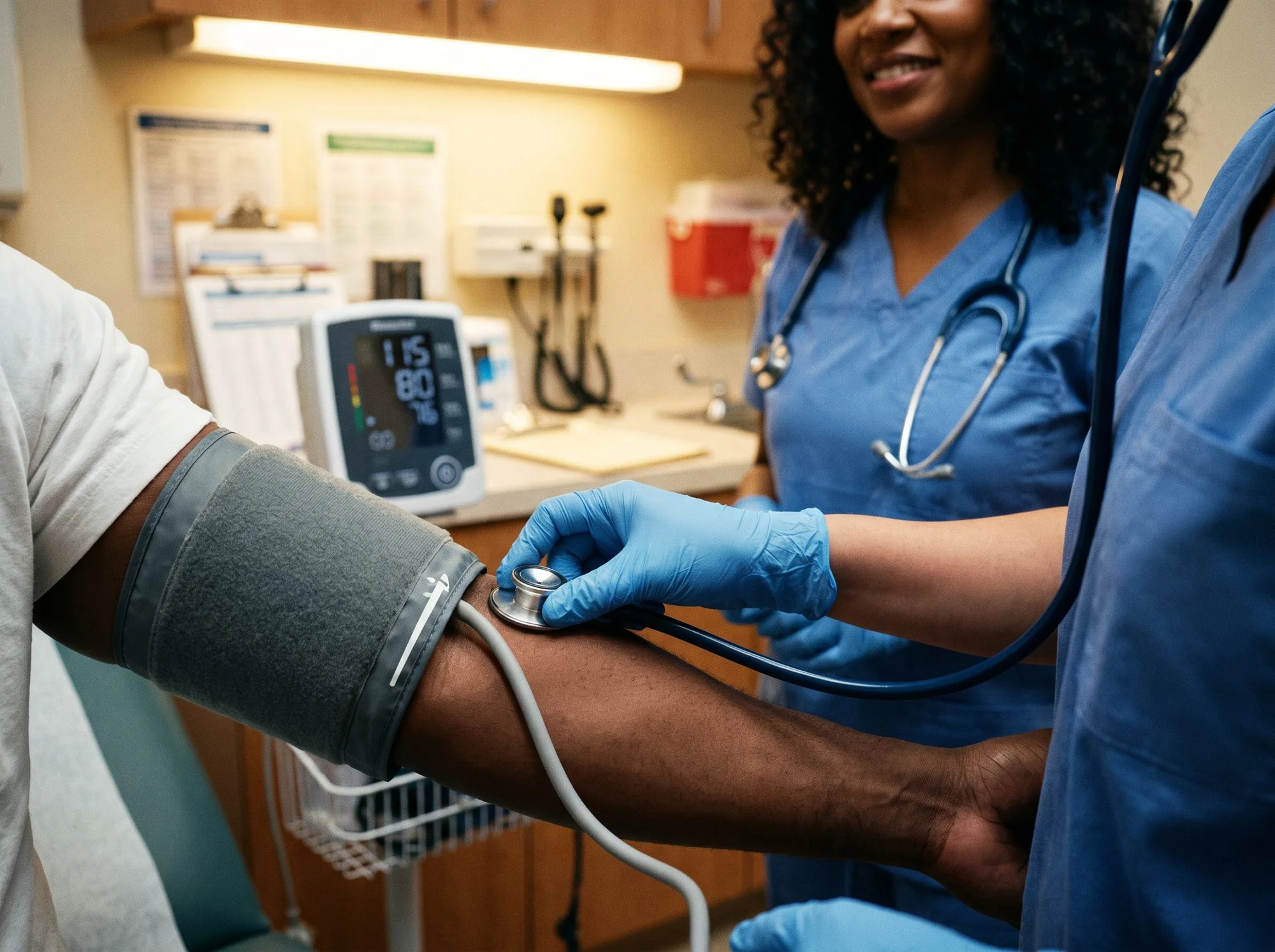
- Blood pressure check. The screening federal authorities rate at their highest grade for all adults 18 and over.24
- Blood sugar and cholesterol testing in the building’s own lab, the screening recommended for adults 35 to 70 who carry extra weight.25
- A real sit down with a provider. Not a pamphlet. A conversation, and a written plan you take home.
- A pharmacy next door for anything you are prescribed.
- No insurance card. No bill for the visit.
Spots each Wednesday are limited by how many people the staff can see in an afternoon. Visits are by appointment, so confirming eligibility ahead of time is how you get one of them.
This does not fix the law. One practice on one island cannot undo a definition written into a federal statute in 2010.
What it can do is take the single thing the research is clearest about, a regular place that knows you, and hand it to the people the law skipped.
60 seconds is all it takes to know if you qualify. A few questions about your household and your coverage, and you will know whether Wednesday is for you.
Verify My Eligibility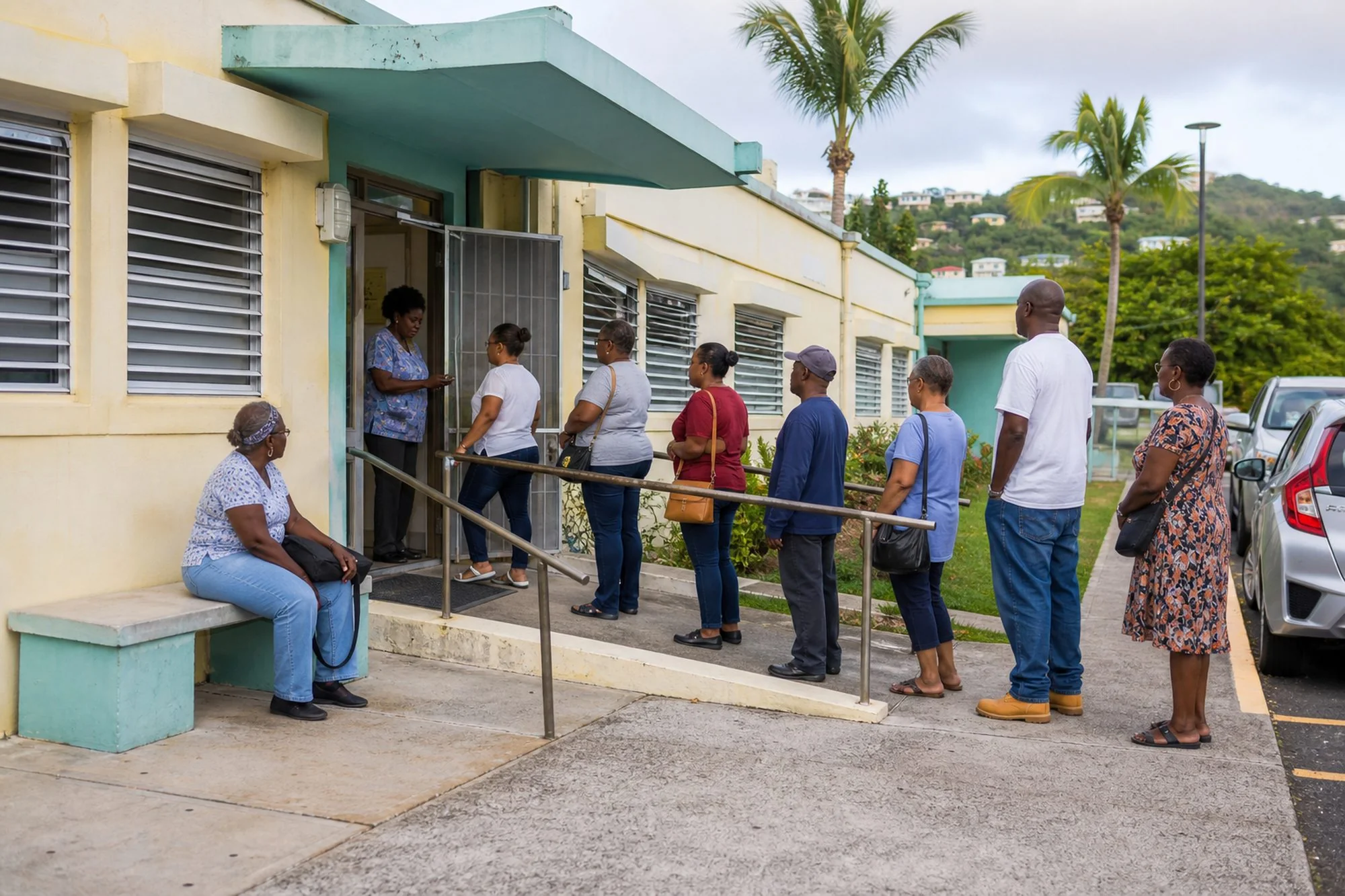
Part EightTwo Wednesdays from now
Nothing in this report is going to change the law this year. The word state is still going to mean what it means. The marketplace is not coming. The rebuilt hospital is years out.
So the only real question left is a small one, and it is yours.
There is a version of the next two years where you keep doing what you have been doing. You feel fine most days. The thing in your chest or your foot or your head comes and goes. You handle it. Then one afternoon it stops being something you handle, and you find out what your blood pressure has been doing quietly for six years while nobody was looking.
There is another version where you go on a Wednesday, in the middle of the day, on a break or a swapped shift. Somebody puts a cuff on your arm. Somebody draws a little blood. You find out where you actually stand. Maybe everything is fine and you go to work with an hour lost and a weight off you. Maybe it is not fine, and you find out now, while it is still the cheap kind of problem.
A former resident wrote something online this spring about living here with a health condition. He was not being dramatic. He was describing his own family:
You roll the dice and sometimes you lose.35
A Virgin Islander, writing publicly, April 2026He is right, and that is the part worth sitting with.
You have been rolling. You did not choose to. Somebody drew a line in 2010 and left you standing on the wrong side of it, then never sent word.
Wednesday is a door. It does not ask what the line says.
Find out in 60 seconds whether Wednesday is for you.
A short set of questions about your household and your coverage. No insurance card needed. No bill for the visit.
Verify My EligibilityFor low income, uninsured residents of St. Croix. Spots each Wednesday are limited by clinic capacity. Checking eligibility does not obligate you to anything.
Sources and further reading
Every numbered claim in this report links here. Where sources disagree, or where a figure is contested, we have said so in the text. Government figures, survey data, and peer reviewed research are listed with their publication details so you can check them yourself.
- V.I. loses only option for individual health insurance; company sought higher rate. The Virgin Islands Daily News. Reports the exit of Optimum Global Insurance Company from the U.S.V.I. individual market effective December 31, 2025, affecting 63 individuals under 43 active policies, after a requested 7.5% rate increase was approved at 4%. Read the report
- Health Insurance for Individuals Remains a Dream Deferred. The St. Thomas Source, August 26, 2022. Documents the absence of any individual health insurance market in the U.S. Virgin Islands and the reasons cited by regulators and insurers.stthomassource.com
- Affordable Care Act §1323, codified at 42 U.S.C. §18043 (“Territories”). Statutory text establishing that a territory electing to establish an Exchange is treated as a State, appropriating $1 billion for 2014–2019 with $925,000,000 allocated to Puerto Rico, and providing that a territory not establishing an Exchange instead receives an increase in its Medicaid allotment under Section 1108 of the Social Security Act. Read the statute
- United States Virgin Islands. Centers for Medicare & Medicaid Services, Medicaid.gov state overview. Records $24.9 million awarded to the U.S. Virgin Islands “in lieu of establishing a health marketplace.” Note: portions of this page are dated, with its eligibility table marked as of April 2017.medicaid.gov
- Letter to territorial insurance commissioners. Center for Consumer Information and Insurance Oversight, Centers for Medicare & Medicaid Services, July 16, 2014. Concludes that new Public Health Service Act provisions enacted in Title I of the ACA “do not apply to the territories,” specifically naming guaranteed availability, community rating, single risk pool, rate review, medical loss ratio, and essential health benefits.Read the letter (PDF)
- U.S. Territories discussion paper. National Association of Insurance Commissioners, October 7, 2013. States that the sole insurer in the U.S.V.I. individual market ceased issuing new policies, “leaving residents of the territory unable to purchase individual health insurance for any price,” and records the territory’s calculation that it required $251.5 million in exchange subsidies over six years against roughly $25 million allocated.Read the paper (PDF)
- Office of Medicaid. U.S. Virgin Islands Department of Human Services. Lists a categorically eligible income limit of $15,654 for a family of one. The published page does not carry an effective date; readers should confirm current figures directly with the agency.dhs.vi.gov
- Medicaid and CHIP in the Territories. Medicaid and CHIP Payment and Access Commission (MACPAC), February 2021. Documents that Guam, Puerto Rico, and the U.S. Virgin Islands expanded Medicaid to the new adult group up to 133 percent of local poverty rather than the federal poverty level.Read the brief (PDF)
- HHS Poverty Guidelines. Office of the Assistant Secretary for Planning and Evaluation, U.S. Department of Health and Human Services. 2025 guidelines: $15,650 for one person, $26,650 for three, $32,150 for four in the 48 contiguous states.aspe.hhs.gov
- Mass Medicaid Terminations in USVI Leaves 16,480 Without Healthcare; Lawmakers Fear Health Crisis. VI Consortium, July 3, 2024. Reports testimony that enrollment fell to 21,463 after 16,480 residents, about 19 percent of the territory’s population, were removed in roughly one month following the end of pandemic era protections, against a government projection of about 9,000.viconsortium.com
- 2020 Island Areas Censuses, U.S. Virgin Islands. U.S. Census Bureau, Demographic Profile Summary File, table DP3 (income and poverty items reference calendar year 2019). Territory population 87,146; St. Croix population 41,004; St. Croix median household income $39,445; 7,693 St. Croix residents without health insurance (19.6%); 3,262 employed St. Croix adults aged 19–64 without coverage (23.8% of the employed).census.gov
- Behavioral Risk Factor Surveillance System (BRFSS) Prevalence Data, U.S. Virgin Islands. Centers for Disease Control and Prevention, dataset dttw-5yxu, 2023 survey year. Uninsured 17.5% (95% CI 14.3–20.7); could not see a doctor in the past 12 months due to cost 17.2% (95% CI 14.2–20.2); no personal doctor or health care provider 21.4%; diagnosed diabetes 16.6%; diagnosed high blood pressure 38.1%. Crude, self reported prevalence, not age adjusted.data.cdc.gov
- Health Professional Shortage Areas and Medically Underserved Areas, St. Croix. Health Resources and Services Administration Data Warehouse. St. Croix is a designated High Needs Geographic HPSA for primary care (score 16), dental (18), and mental health (18, population to provider ratio 6,998:1), and has been a designated Medically Underserved Area continuously since March 30, 1995 (Index of Medical Underservice 43.70).data.hrsa.gov
- Hospital General Information. Centers for Medicare & Medicaid Services Provider Data Catalog, dataset xubh-q36u. Gov. Juan F. Luis Hospital & Medical Center (CCN 480002) holds a CMS Overall Star Rating of 1 out of 5. Emergency department timeliness measures are reported as Not Available for this facility.data.cms.gov
- Healthcare Workers Sound Alarm Over Conditions at Juan F. Luis Hospital. VI Consortium, December 14, 2025. Reports the hospital’s Medical Executive Committee formally notifying CMS of adverse conditions, and quotes a staff letter stating “We are rationing care.”viconsortium.com
- JFL Demolition and Construction to Commence Early 2026, With Four to Five Year Completion Timeline Expected. VI Consortium, October 16, 2025. Documents that St. Croix continues to operate from temporary modular hospital units following the 2017 hurricanes, with a four to five year construction timeline for the permanent replacement.viconsortium.com
- Oladele CR, Miller MI, Adams OP, Maharaj RG, Nazario CM, Nunez M, Nunez-Smith M, Desai M. Sociodemographic correlates of hypertension prevalence, awareness, and control in the Eastern Caribbean. The Lancet Regional Health — Americas. 2025;43:101012. Cross sectional analysis of 2,932 adults aged 40+ in Barbados, Puerto Rico, Trinidad & Tobago, and the U.S. Virgin Islands (ECHORN Cohort Study). Hypertension prevalence 57.9%; 36.8% of those affected were unaware. Having a usual source of health care was associated with an odds ratio of 5.66 (95% CI 3.8–8.4) for awareness. View study
- Liaw W, Petterson S, Rabin DL, Bazemore A. The Impact of Insurance and a Usual Source of Care on Emergency Department Use in the United States. International Journal of Family Medicine. 2014;2014:842847. Analysis of Medical Expenditure Panel Survey data. Among uninsured respondents without a usual source of care, 24.1% had half or more of their ambulatory visits in an emergency department, versus 8.8% of uninsured respondents who had a usual source of care. View study
- Sandvik H, Hetlevik Ø, Blinkenberg J, Hunskår S. Continuity in general practice as predictor of mortality, acute hospitalisation, and use of out-of-hours care: a registry-based observational study in Norway. British Journal of General Practice. 2022;72(715):e84–e90. National registry study of 4,552,978 people. Compared with a one year relationship, a relationship of more than 15 years with the same GP was associated with 25% lower odds of dying (OR 0.75, 95% CI 0.70–0.80) and 28% lower odds of acute hospital admission. Observational; Norway has universal coverage. View study
- Pereira Gray DJ, Sidaway-Lee K, White E, Thorne A, Evans PH. Continuity of care with doctors: a matter of life and death? A systematic review of continuity of care and mortality. BMJ Open. 2018;8(6):e021161. Systematic review of 22 studies across nine countries; 18 (81.8%) reported statistically significant reductions in mortality with increased continuity of care. Continuity was measured differently across studies, so no pooled effect size was calculated. View study
- Basu S, Berkowitz SA, Phillips RL, Bitton A, Landon BE, Phillips RS. Association of Primary Care Physician Supply With Population Mortality in the United States, 2005–2015. JAMA Internal Medicine. 2019;179(4):506–514. Study of 3,142 U.S. counties. Every 10 additional primary care physicians per 100,000 population was associated with a 51.5 day increase in life expectancy (95% CI 29.5–73.5), versus 19.2 days for 10 additional specialists. County level analysis; association, not causation. View study
- Fryar CD, Kit B, Carroll MD, Afful J. Hypertension Prevalence, Awareness, Treatment, and Control Among Adults Age 18 and Older: United States, August 2021–August 2023. NCHS Data Brief No. 511, National Center for Health Statistics, October 2024. Based on measured blood pressure in NHANES: 47.7% of U.S. adults have hypertension, and only 59.2% of those affected are aware of it.Read the brief (PDF)
- National Diabetes Statistics Report. Centers for Disease Control and Prevention. Reports that 38.1 million U.S. adults have diabetes and 8.7 million of them, 22.8%, are undiagnosed (data through 2021). A more recent CDC update using 2023 data reports 27.6% undiagnosed. Undiagnosed prevalence is estimated from laboratory values in a survey sample and extrapolated.cdc.gov
- Screening for Hypertension in Adults: US Preventive Services Task Force Reaffirmation Recommendation Statement. JAMA. April 27, 2021. Grade A, the Task Force’s highest rating: screening for hypertension in adults 18 years or older with office blood pressure measurement. View recommendation
- Screening for Prediabetes and Type 2 Diabetes: US Preventive Services Task Force Recommendation Statement. JAMA. 2021;326(8):736–743. Grade B: screening for prediabetes and type 2 diabetes in adults aged 35 to 70 who have overweight or obesity. The statement notes that diabetes is the leading cause of kidney failure and of new cases of blindness among U.S. adults. View recommendation
- Prevalence of Diabetes — U.S. Virgin Islands, 1999–2001. Morbidity and Mortality Weekly Report, Centers for Disease Control and Prevention. 2003;52(27):637. Crude prevalence of diagnosed diabetes among U.S.V.I. adults was 7.6% (95% CI 6.8–8.4). Compare with the crude 2023 BRFSS figure of 16.6% in reference 12; note that the territory’s population has also aged over this period. View report
- Hassan S, Magny-Normilus C, Galusha D, Adams OP, Maharaj RG, Nazario CM, Nunez M, Nunez-Smith M. Glycemic control and management of cardiovascular risk factors among adults with diabetes in the Eastern Caribbean Health Outcomes Research Network (ECHORN) Cohort Study. Primary Care Diabetes. 2022;16(1):107–115. Among Caribbean adults with diabetes including U.S. Virgin Islanders, 23% had an HbA1c of 9% or higher and 70.2% had systolic blood pressure of 130 mm Hg or higher. View study
- Cairns C, Ashman JJ, Kang K. Emergency Department Visit Rates by Selected Characteristics: United States, 2019. NCHS Data Brief No. 434, National Center for Health Statistics, March 2022. Emergency department visit rate was 39 visits per 100 uninsured people versus 19 per 100 people with private insurance.Read the brief (PDF)
- Rakshit S, Cotter L, McGough M, Claxton G. How does cost affect access to healthcare? Peterson-KFF Health System Tracker, analysis of the CDC National Health Interview Survey, 2024 data. In 2024, 31% of uninsured adults delayed or did not get medical care due to cost, compared with 8% of insured adults. This is a policy analysis of survey microdata rather than a peer reviewed study.healthsystemtracker.org
- Frederiksted Health Care Expands While Anticipating Funding Cut. St. Croix Source, August 12, 2025. Reports that the federally qualified health center serves roughly 10,000 patients, close to one quarter of St. Croix’s population, across about 45,000 visits per year, on a sliding scale with some uninsured patients not charged.stcroixsource.com
- Community Health Services and 2026 USVI Health & Wellness Fair. U.S. Virgin Islands Department of Health. Community Health Services medical clinic hours are listed as Monday through Friday, 8:30 to 11:30 a.m. The annual free wellness fair on St. Croix ran June 8–12, 2026, weekdays 9 a.m. to 3 p.m.doh.vi.gov
- Virgin Islands Economy at a Glance. U.S. Bureau of Labor Statistics, April 2026 data published June 4, 2026. Average weekly wage in the U.S.V.I. was $1,068 against a U.S. average of $1,569. Total nonfarm employment fell 7.4% year over year, with leisure and hospitality down 18.3%.Read the summary (PDF)
- Wiciak MT, Perez S, Richards T, Escobar K, Evans DP, Nunez-Smith M, Hassan S. Addressing non-communicable disease management during disasters in the US Virgin Islands: a mixed methods study. Frontiers in Public Health. 2025;13:1606631. Nearly one third of participants could not manage their chronic conditions after Hurricanes Irma and Maria, with lack of medication access and disrupted health services each cited by 34.6%. View study
- Dr. Arakere Prasad, founder of Primary Care, PLLC, voted Best Physician and his staff the Best Medical Customer Service Team on St. Croix. Virgin Islands Daily News, Blue Ribbon awards feature, 2019. Documents Dr. Prasad’s practice on St. Croix since 1982 and family practice since 1988, eight years in the emergency room and fifteen years as a pediatrician at Gov. Juan F. Luis Hospital, board certification in emergency medicine and internal medicine, and the practice’s in-house laboratory and on-premise pharmacy. Blue Ribbon awards are reader voted recognitions, not clinical outcome rankings.
- “You roll the dice and sometimes you lose.” Comment by u/mindthenoize in r/virginislands, April 10, 2026. A former resident describing eight years living in the territory, a family member’s heart attack and 14 hours of travel time, and a spouse who lost vision in one eye while waiting on off island treatment. Public social media comment, quoted as the writer published it; the account holder’s identity and the underlying medical details are not independently verified. Read the comment
Important Health and Advertising Disclosures
If this is an emergency, do not wait for Wednesday. Chest pain, trouble breathing, severe bleeding, sudden weakness or numbness, slurred speech, a drooping face, severe abdominal pain, a serious injury, or thoughts of harming yourself are emergencies. Call 911 or go to the nearest emergency room immediately. A free screening clinic is not a substitute for emergency care.
This is advertising. This article is a paid advertorial produced on behalf of Primary Care, PLLC of St. Croix, U.S. Virgin Islands. “The Island Report” is a presentation format used for this advertisement and is not an independent news organization. This content is not endorsed by, affiliated with, or produced by any newspaper, government agency, or the authors of any study cited here.
Not medical advice. The information here is provided for general education only. It is not a substitute for professional medical advice, diagnosis, or treatment. Never disregard professional medical advice or delay seeking it because of something you read in this article. Always talk with a qualified health care provider about your own situation. Only a licensed clinician who has examined you can diagnose or treat a medical condition.
Regulatory statement. The screenings and services described here are clinical services provided by licensed health care professionals. They are not products, drugs, or dietary supplements. No statement in this article has been evaluated by the U.S. Food and Drug Administration, and nothing described here is intended to diagnose, treat, cure, or prevent any disease outside of the ordinary practice of medicine by licensed clinicians. No specific medication, device, or commercial product is being promoted or offered for sale in this article.
About the research cited. Studies referenced above were conducted in a range of populations and settings, and most are observational rather than randomized. Results reported in a research study describe averages across a group and do not predict what will happen to any individual. Where evidence is mixed or contested, we have said so in the body of this article and included the contrary findings in the source list. No outcome is promised, guaranteed, or implied for any person who attends this clinic.
About eligibility. The free Wednesday clinic is intended for low income, uninsured residents of St. Croix. Eligibility is determined by the practice. Capacity each week is limited by clinic staffing, and completing an eligibility check does not reserve, guarantee, or promise an appointment, a service, a diagnosis, or any particular result. Clinic days, hours, and services are subject to change. Please call the practice to confirm before you travel.
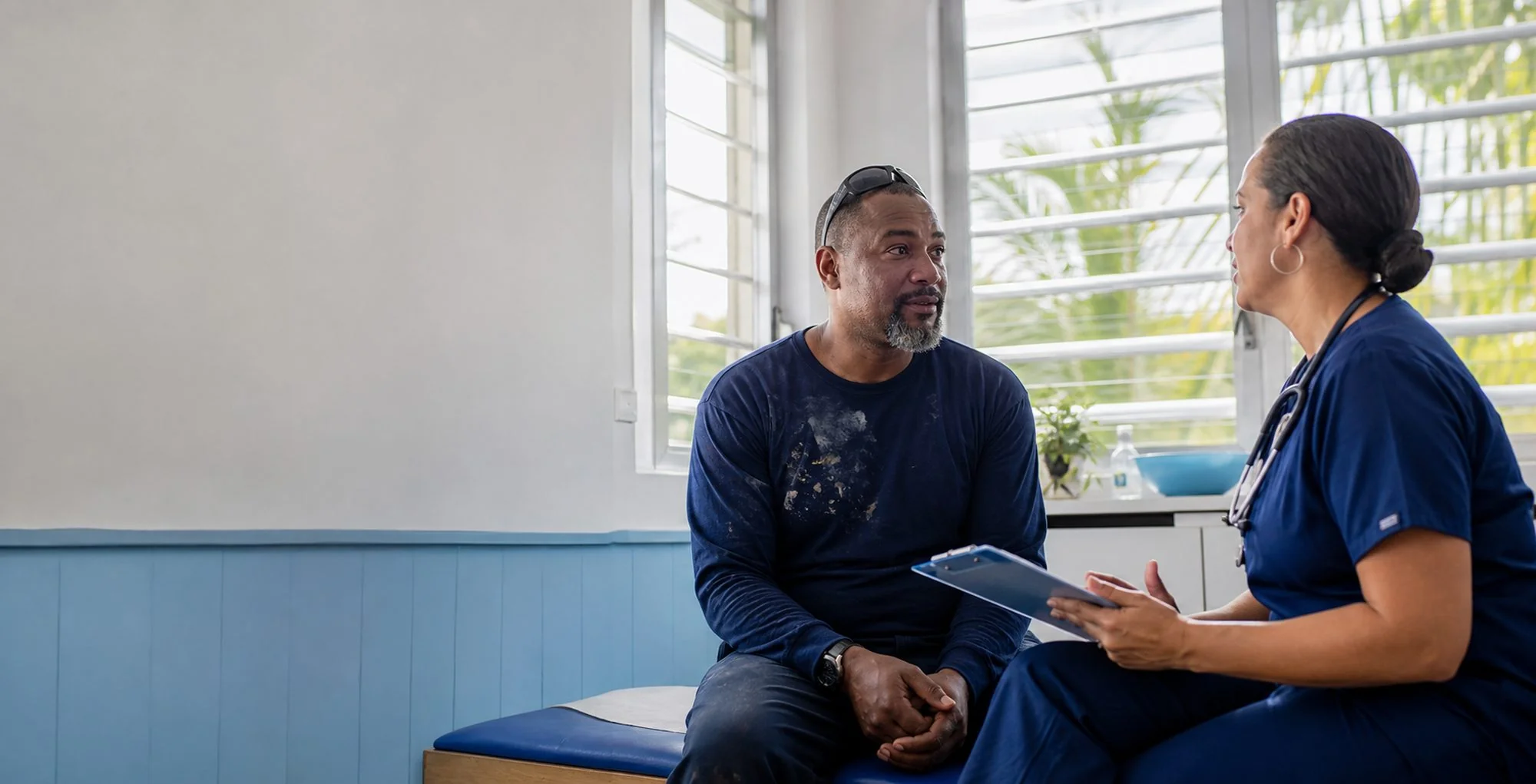
About the images. The photographs in this article are illustrative images created with generative artificial intelligence. They do not depict real patients, real staff members, real events, or any actual location. No image should be understood as a testimonial or as documentation of an actual person or outcome.
About the data. Figures were current as of publication and are cited with their sources and dates above. Government eligibility thresholds, program rules, clinic schedules, and insurance market conditions change. Some source documents carry no effective date, and where federal sources disagreed with each other we have noted it. Readers should confirm current Medicaid eligibility figures directly with the U.S. Virgin Islands Department of Human Services Office of Medicaid.
Privacy. Any information you provide in the eligibility check is used to determine whether you may qualify for this program and to contact you about it. It is not a medical record and does not create a doctor patient relationship.